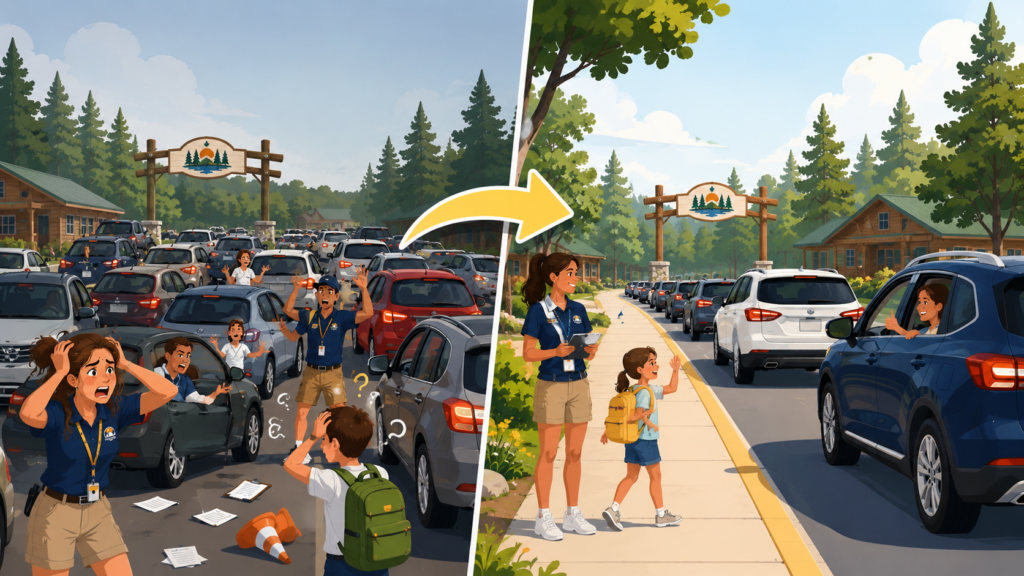

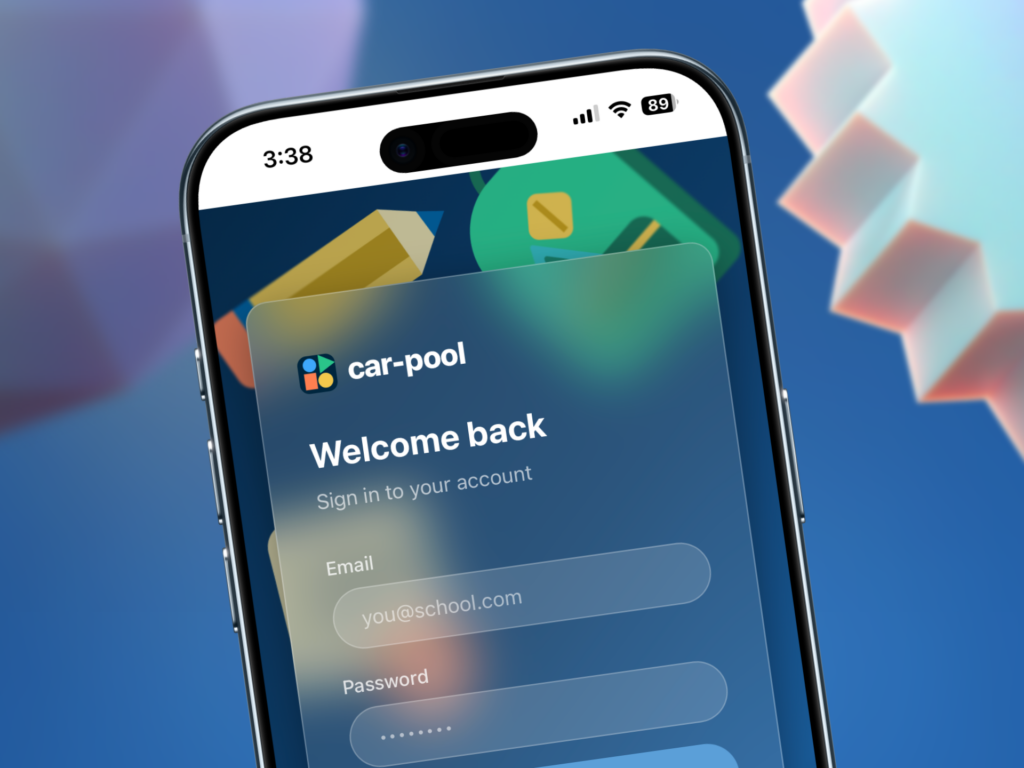
Summer camp pickup looks chaotic for a reason. At the end of the day, dozens of cars arrive in a tight window, counselors scramble to match each child to the right adult, and parents text “I’m here” to whoever might answer. It’s stressful for staff, slow for families, and — the part that keeps camp directors up at night — it’s a safety gap. The moment a child is handed to the wrong car is the moment a camp’s reputation is on the line. If your summer camp pickup process feels like it falls apart every single afternoon, you’re not alone, and the problem usually isn’t your team. It’s the method. Why most camps try to fix pickup the expensive way Most camps try to solve pickup chaos by adding people. More counselors at the curb, more clipboards, more radios, more eyes on the lot. It works, barely — but it doesn’t scale, and it burns out your staff during the exact part of the day when everyone is already exhausted. Worse, throwing more people at a broken process just makes the broken process more expensive. You end up paying more for a pickup line that’s still slow. The camps that have actually fixed summer camp pickup didn’t add headcount. They changed the process itself. What organized camp pickup actually looks like Instead of parents guessing and counselors shouting names across a parking lot, the whole handoff runs on a shared, real-time view of who has arrived and who is ready to go. Here’s what that looks like in practice. A parent checks in from their phone as they pull into the lot — no honking, no flagging down a counselor. Staff see a live queue showing which families are waiting and which children are ready, so a child is only called to the curb when their ride is actually there. When the handoff happens, it’s marked complete. Every step is visible, every step is logged, and nobody is relying on memory or a hand-waved placard. The three things that improve immediately When camp pickup runs on a real-time system instead of clipboards, the difference shows up in three places. Safety improves first. Every pickup is tied to an authorized adult and recorded, so there’s no ambiguity about who took which camper. A staff member never has to make a judgment call about whether the person at the curb is allowed to take a child — the system already knows. Communication improves next. Parents stop calling the camp office to ask where their kid is, because they can see the status themselves. That alone removes a huge load from your front desk during the busiest fifteen minutes of the day. And the line simply moves faster. Children come out in the order cars actually arrive, instead of in a guessing game, so the whole lot clears quicker and parents spend less time idling. The real bottleneck isn’t your staff — it’s visibility Here’s the insight most camps miss. Pickup chaos isn’t a staffing problem. It’s a visibility problem. Your counselors can’t move quickly because they can’t see what’s coming — which car is next, which child is ready, who’s authorized. Add ten more counselors and they’re all still guessing. Give your existing staff a clear, live picture and they move faster with fewer people. That’s why the fix isn’t hiring. It’s replacing the clipboard-and-radio method with a system built for exactly this moment. For a camp running pickup five days a week all summer, that’s not a small upgrade — it’s the difference between dismissal being the worst part of the day and being a non-event. Getting ahead of it before the season starts The best time to fix summer camp pickup is before the chaos sets in, not in week three when your staff is already frazzled. If your camp is heading into the season dreading the pickup line, it’s worth seeing what a calmer version looks like while you still have time to set it up properly. A safer, faster pickup doesn’t require a bigger team. It requires a better process — and that’s something you can put in place before the first camper arrives.