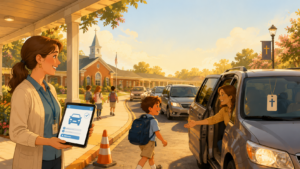

Ask any school administrator what the most stressful ten minutes of the day are, and a lot of them will say dismissal. Not because the kids are hard to manage, but because pickup is where poor systems show up fastest: cars backing up, staff shouting names, parents circling the block. The schools that have solved this didn’t do it with more staff. They did it by redesigning the workflow.
Why pickup breaks down in the first place
Dismissal chaos usually comes from the same three root causes, whatever the school.
No advance notice. Staff only know a parent has arrived once the car is at the curb, so everything downstream, finding the student, calling them to the door, happens too late to keep the line moving.
No single source of truth. When information lives on a clipboard or gets passed by radio, different staff members are working off different pictures of what’s happening. Delays and mismatches follow.
No structure for exceptions. Late pickups, authorized substitutes, walkers, and bus changes all get handled ad hoc, which slows down the default flow for everyone else.
The systems that fix it
Schools that have calmed down dismissal generally put three things in place.
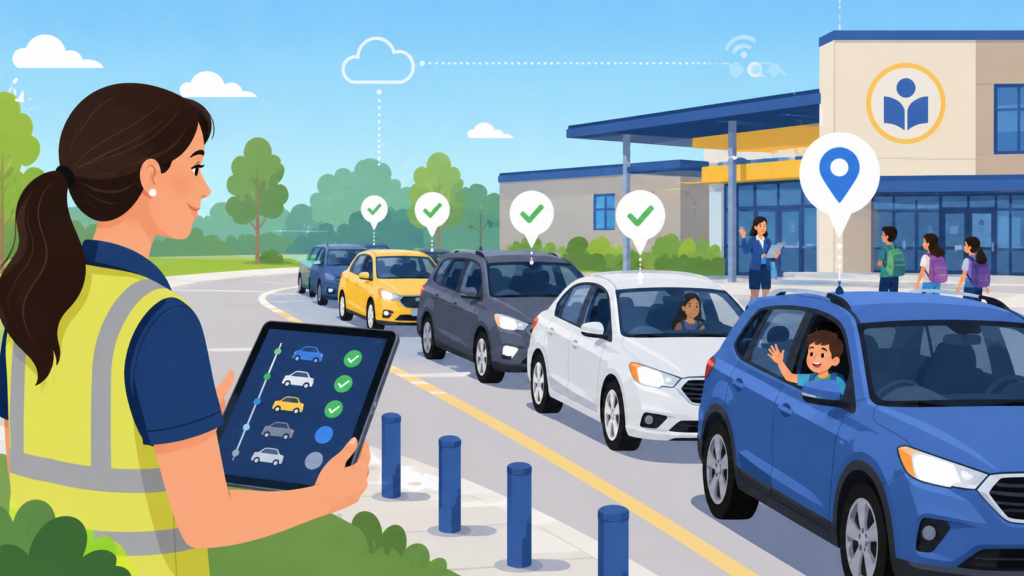
A queueing system tied to arrival, not arrival at the curb. Rather than waiting for a car to reach the front, a system that flags a parent as they approach campus gives staff a head start, so the student is already moving before the car is in position.
A shared, always-current view. Instead of one person coordinating everything, every staff member with a phone or tablet sees the same live list of who’s next. That alone removes most of the radio traffic.
A defined path for exceptions. Authorized pickup lists, late-pickup holding areas, and walker/bus routing are set up ahead of time rather than negotiated in the moment, so an unusual case doesn’t stall the main line.
What changes operationally
The visible result is a shorter line, but the underlying change is bigger: dismissal stops being reactive. Staff aren’t waiting to be told what’s happening, they’re watching it happen and acting a step ahead. That shift, from reacting to anticipating, is what separates a school that dreads 3:00 PM from one that treats it as routine.
Getting there
None of this requires a full overhaul. Most schools start with the queueing piece, since it has the most immediate effect on how long the line takes, and layer in shared dashboards and exception handling once that’s stable. The schools with the calmest pickup lines aren’t the ones with the most staff on duty. They’re the ones where every staff member knows exactly what’s coming next.