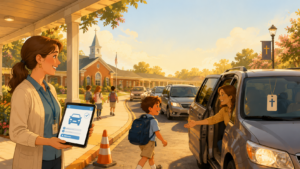

Every school day ends the same way at thousands of schools: a line of cars, a walkie-talkie, a staff member squinting to match faces to a clipboard. It works, but it’s slow, and it puts a lot of pressure on whoever’s holding the clipboard. Real-time pickup systems are changing that by replacing guesswork with live data.
The problem with traditional dismissal
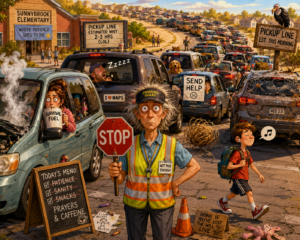
Manual dismissal relies on staff recognizing cars, radioing names ahead, and hoping no one’s out of position. It scales poorly. Add ten more cars to the line and the whole process backs up, sometimes onto public roads. Miscommunication is common, and there’s little record of who picked up whom or when.
What “real-time” actually means
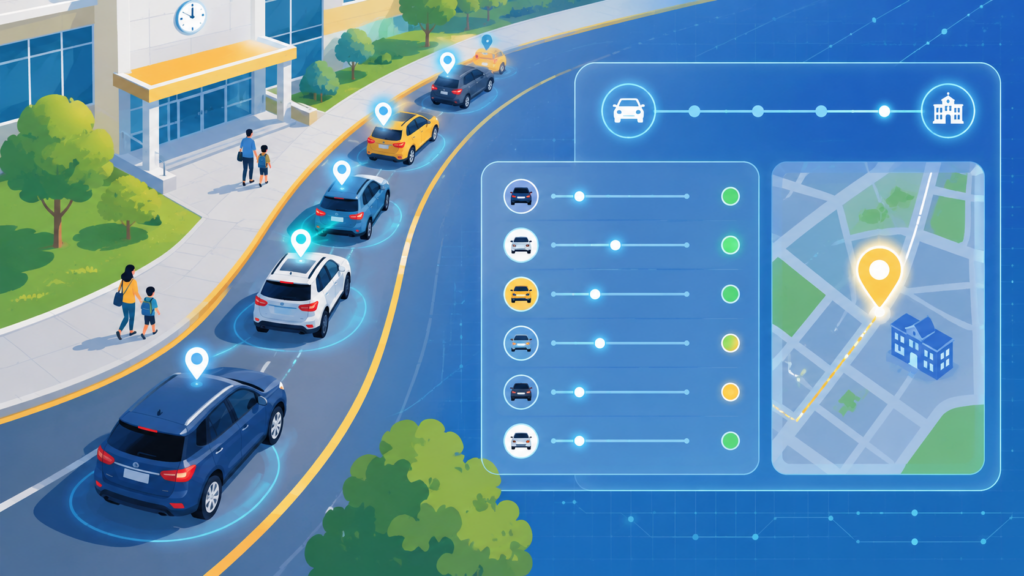
A real-time pickup system tracks where a parent’s car is as it approaches campus, usually through GPS in a mobile app, and updates a dashboard the school can see instantly. Instead of staff spotting a car and radioing ahead, the system tells them a specific student is next, in the right order, before the car reaches the curb.
Three pieces make this work:
Live arrival tracking. The app shows a parent entering a geofence around the school and puts their child into a queue automatically, no check-in step required.
An operational dashboard. Staff see an ordered list of who’s arriving, in what sequence, updated as cars move. Runners can call students down before the car is even at the door.
Confirmation and handoff logging. Each release is logged automatically, so there’s a timestamped record of who picked up which child, which matters for both safety and liability.
Why it improves dismissal
The gains aren’t just about speed, though a shorter line matters. Automatic queueing removes the radio-relay step that causes most delays. A shared dashboard means every staff member, not just the one closest to the line, knows what’s happening in real time. And because releases are logged, schools get an audit trail without extra paperwork.
The net effect: dismissal that used to take twenty-five minutes and a lot of shouting can run in under ten, with fewer errors and a clearer record if something needs to be checked later.
The bigger shift
This is really part of a broader pattern in school operations: moving from static, manual processes to live, connected ones. Attendance, transportation, and now dismissal are all becoming things schools can see happening in real time rather than reconstruct after the fact. Pickup is one of the simplest places to start, and often the one parents notice first.