
Every school administrator knows the scene: a line of cars stretching down the block, frustrated parents checking the clock, and staff members shouting names into the afternoon air. Dismissal should take fifteen minutes. Too often, it takes forty-five. The good news is that long pickup lines are an operational problem, and operational problems have operational solutions.
This guide breaks down exactly what slows dismissal down and how schools are fixing it.
Why School Dismissal Gets So Slow
Before you can speed up your pickup process, you need to understand where the time actually goes. Most carpool delays trace back to a handful of predictable bottlenecks.
The identification bottleneck. When a car pulls up, someone has to figure out which student belongs to that driver, then locate that student, then confirm the driver is authorized to take them. Done manually with clipboards and walkie-talkies, each handoff eats up precious seconds that multiply across hundreds of families.
The “where is my kid” gap. Students aren’t standing at the curb the moment their car arrives. They’re still in classrooms, hallways, or the gym. The lag between a car arriving and a student appearing is the single biggest source of dead time in most carpool lines.
Manual communication breakdowns. Radios crackle, names get misheard, and staff at the curb have no reliable way to tell staff inside which students to send out next. Information moves slower than the cars do.
Authorization uncertainty. Is this the right person to release the child to? Did the parent send a babysitter today? Without a fast way to verify pickup authorization, staff either slow down to check or wave cars through and create a safety risk.
Unpredictable surges. Everyone arrives in the same ten-minute window. When 80% of your families show up at once, even a well-run system buckles under the load.
How Schools Actually Solve It
Schools that have cracked dismissal generally combine smarter logistics with technology built specifically for the problem. Here’s what works.
Stagger and sequence arrivals
The simplest fix costs nothing: spread out when families arrive. Assign pickup windows by grade level, last name, or family, and communicate them clearly. Even a five-minute stagger between groups dramatically reduces peak congestion. Pair this with a clearly marked, one-directional traffic flow so cars never have to cross paths or back up.
Pre-stage students before cars arrive
The goal is to have students ready and waiting before their ride reaches the front of the line, not after. This is where dismissal technology earns its keep: when the system knows a parent is approaching, it can alert classroom staff to send that specific student out ahead of time, closing the “where is my kid” gap entirely.
Use a digital identification system
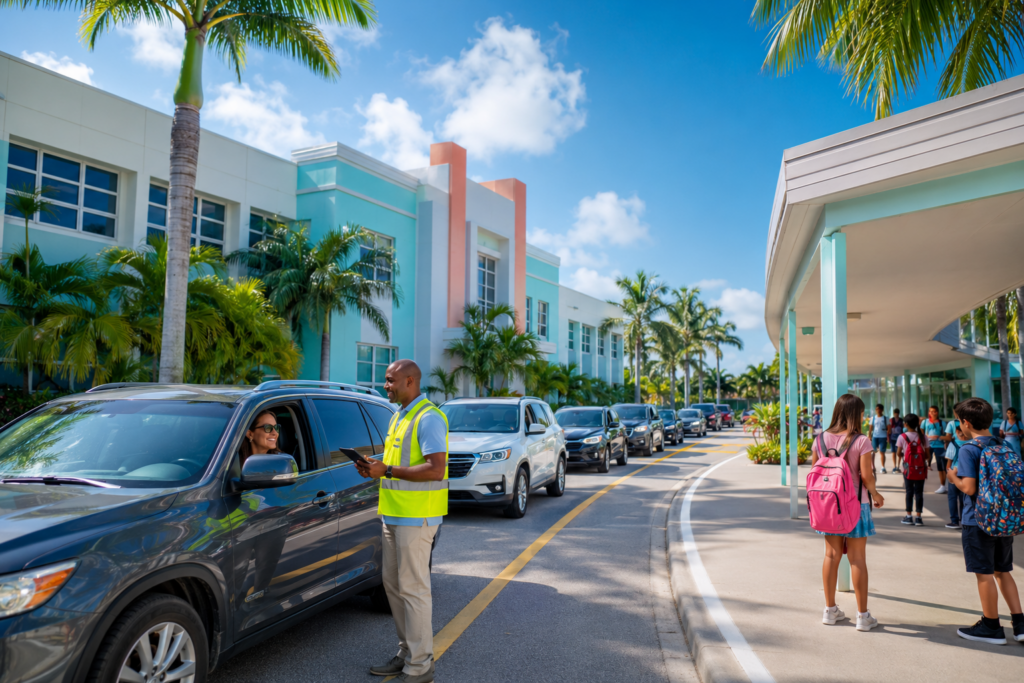
Replace the clipboard. A student dismissal system that assigns each family a scannable tag, license-plate match, or app-based check-in removes the guesswork from identification. Staff at the curb instantly see who’s arriving and which student to release, and authorization is verified automatically against an approved pickup list.
Give parents and staff a shared real-time view
The most effective setups keep everyone on the same page in real time. Parents announce their arrival from the app, curbside staff see the queue building, and inside staff get a live list of which students to send out next. Nobody is guessing, and nothing depends on a radio call being heard correctly.
What Dismissal Software Does
If you’ve researched solutions, you’ve encountered the category of tools built specifically for this: school dismissal software and carpool apps for schools. Here’s how this software actually works in practice.
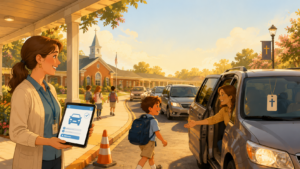
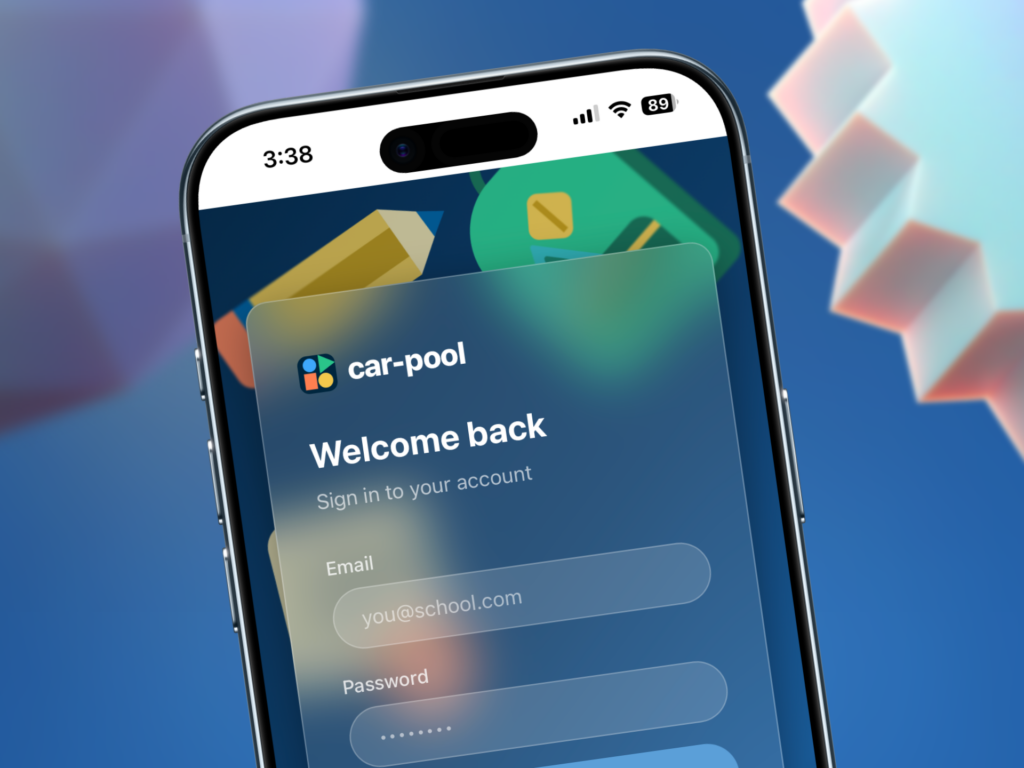
A typical student pickup system gives each family a digital identity in the platform, along with a list of approved adults authorized to collect each child. On the parent side, a carpool app lets families tap “I’m on my way” or check in automatically using GPS or geofencing as they approach campus. On the school side, staff get a live dismissal dashboard.
As parents arrive, the dismissal app for schools surfaces their student’s name to the staff inside the building, who pre-stage the child for a fast handoff. At the curb, staff confirm the match in seconds rather than minutes. The result is a school dismissal management process that flows continuously instead of stopping and starting.
Good school carpool software also handles the edge cases that derail manual systems: a parent who needs someone else to pick up today, a student who switches from carpool to bus, a sibling group that needs to leave together, and the daily attendance and release records that schools are required to keep. Strong student dismissal management means these exceptions get handled in the app instead of creating a curbside traffic jam.
Benefits schools see
The benefits of carpool apps for schools tend to show up quickly. Pickup times drop, often by half. Safety improves because every release is verified against an authorized list, creating a clear digital record of who took which child and when. Staff stress goes down because nobody is sprinting between the curb and the classroom. And parent satisfaction climbs, because shorter lines are one of the most visible quality-of-life improvements a school can deliver.
Choosing a Pickup System for Your School
The best carpool app for schools depends on your size, building layout, and budget, but a few criteria matter across the board.
Look for a student dismissal system that handles your full dismissal picture, not just carpool. Most schools dismiss kids to a mix of car riders, buses, walkers, and after-school programs, so an after school pickup system that only manages the carpool line solves half the problem. K-12 dismissal software should let you manage every dismissal mode from one place.
Prioritize ease of adoption. The fastest pickup system in the world fails if parents won’t use the app or staff find the dashboard confusing. Look for a clean parent experience and minimal training for your team.
Confirm it fits your setting. A private school dismissal software package may emphasize different features than an elementary school pickup system, which tends to weight safety and authorization heavily because younger students can’t self-identify. Match the tool to your population.
Check the safety and records features. Strong school pickup safety tools verify pickup authorization automatically, maintain an audit trail, and let you flag custody restrictions or alerts on specific students. These features protect children and protect the school.
A note on comparing vendors
If you’re evaluating named platforms, you’ll likely compare options like Pikmykid, Pickup Patrol, and School Dismissal Manager. When weighing a Pikmykid alternative or any apps like Pikmykid, run each through the same checklist: Does it cover all dismissal modes? How smooth is the parent app? What does setup and training require? How does it handle authorization and records? Comparing Pikmykid vs carpool-only tools, or any vendor against another, is mostly an exercise in matching features to your specific bottlenecks rather than chasing the longest feature list.
A Simple Action Plan
You don’t need to solve everything at once. Schools that successfully reduce carpool line time usually move in this order:
- Map your current flow. Time your dismissal, count the cars, and identify where the line actually stalls. You can’t fix a bottleneck you haven’t located.
- Fix the free stuff first. Stagger arrival windows, mark a one-way traffic pattern, and assign clear staff roles before spending a dollar on software.
- Pilot a dismissal system. Choose a student pickup system that matches your needs and run it with one grade or one dismissal mode before rolling it out school-wide.
- Pre-stage relentlessly. Whatever tools you use, build your process around having students ready before cars arrive. This single principle drives most of the time savings.
- Measure and adjust. Re-time your dismissal after each change. Treat carpool like the recurring operations problem it is, and keep tuning.
The Bottom Line
Long pickup lines aren’t an inevitable fact of school life. They’re the symptom of slow identification, students who aren’t ready, and communication that can’t keep up with traffic. Schools that combine smart logistics with purpose-built school dismissal software routinely turn a chaotic forty-five-minute ordeal into a calm fifteen-minute flow. The first step is simply deciding that dismissal is a process worth designing, not just enduring.