
Every school in America runs fire drills. You practice them, you time them, you take them seriously — for an event that, statistically, most students will never experience. That’s not a criticism. Preparation is the job.
So here’s the uncomfortable question: why does the one high-risk event that happens
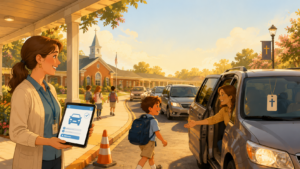
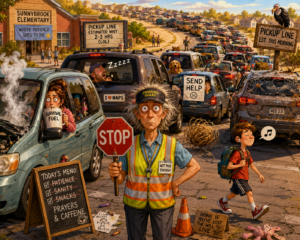
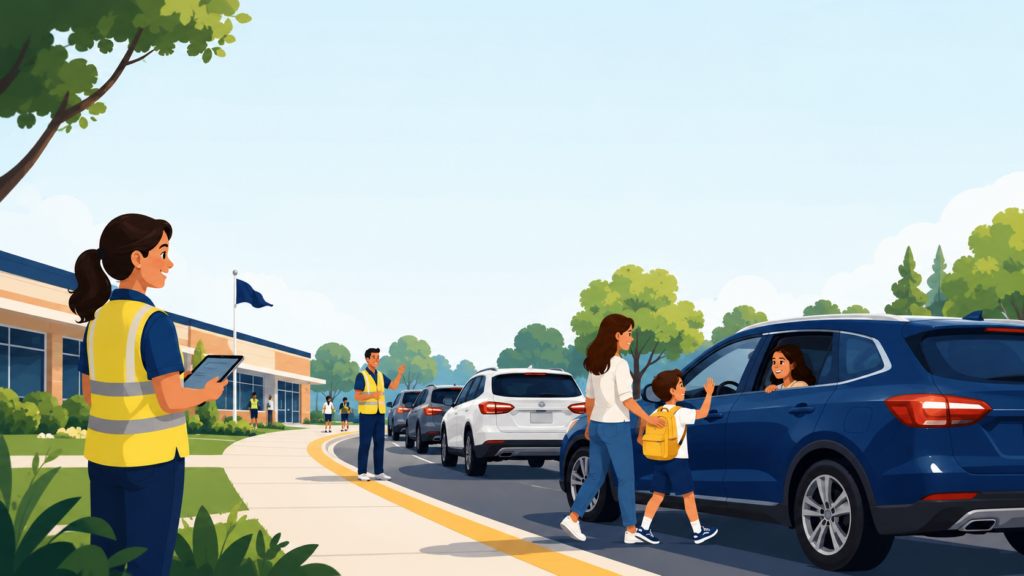
Every school in America runs fire drills. You practice them, you time them, you take them seriously — for an event that, statistically, most students will never experience. That’s not a criticism. Preparation is the job. So here’s the uncomfortable question: why does the one high-risk event that happens every single day — dismissal — run on a system you’d never accept for a fire drill? Think about what dismissal actually is. In a fifteen-minute window, you are releasing hundreds of children into vehicles, matching each one to the correct adult, in a crowded lot, often in bad weather, with staff shouting names and waving clipboards. The entire process depends on a teacher recognizing a face, a parent flashing a hand-written card, or a kid pointing at “that car over there.” That’s not a system. That’s a hope. And the failure modes are not hypothetical. A child gets sent to the wrong car. A parent who isn’t authorized for pickup gets handed a kid because the carpool line was moving too fast to check. A family waits twenty minutes while their child waits inside, and both blame the school. None of these are rare freak events — they’re the predictable output of running a daily high-stakes process on memory and paper. Here’s the part schools don’t like to hear: dismissal chaos isn’t a logistics annoyance. It’s a liability sitting in plain sight. The same administration that documents every fire drill has, for the riskiest recurring event of the day, almost no record of who took which child, when, and whether they were authorized. If something ever went wrong, “we’re pretty sure Mrs. Klein checked” is not an answer you want to give a parent or a lawyer. Now picture the version that works. A parent checks in from their phone as they arrive. Staff see a live, ordered queue of exactly who’s here and who’s ready. A child is only called out when their authorized ride is confirmed present. The handoff is logged — who, when, which adult. The line moves in the order cars actually showed up, not in a scramble. And at the end of the day, there’s an actual record instead of a vague memory. That’s not a luxury upgrade. It’s bringing your most frequent high-risk process up to the same standard you already hold for the rare ones. You wouldn’t run a fire drill on the honor system. Dismissal deserves the same seriousness — and unlike a fire drill, getting it right makes every single day measurably calmer for your staff and your families. The schools that figure this out don’t talk about it as “carpool software.” They talk about it as finally treating dismissal like what it is: a daily safety event worth running properly. If your dismissal still runs on clipboards and crossed fingers, it’s worth seeing what the alternative looks like before the day you wish you had.